


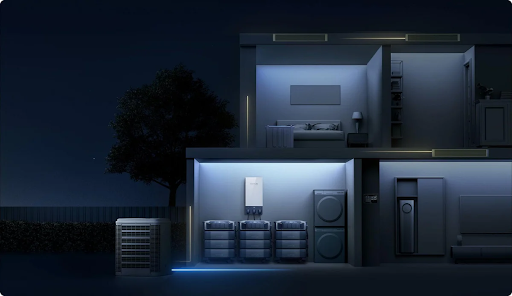
When severe weather or grid failures trigger sudden blackouts, every household responds differently. Some people only need a few hours of basic lighting, while others require their entire home to keep running as usual. The choice between a whole-home battery backup system and a portable power station depends on your routine, outage frequency, and living environment.
This guide breaks down the practical trade-offs—capacity, runtime, installation, noise, maintenance, and long-term value—so you can choose a solution that fits your lifestyle.
Two Types of Backup Power: What Sets Them Apart
A whole-home backup system, often referred to as a whole home generator, is a large-capacity battery solution permanently connected to your electrical panel through an automatic transfer switch. When the grid fails, it detects the outage within seconds and restores power to essential circuits or even the entire home. Since it relies on stored electricity rather than fuel, it runs quietly, produces no emissions, and offers clean, stable energy during long outages.
A portable power station, on the other hand, is a smaller rechargeable battery designed for flexibility and mobility. It can keep phones, lights, Wi-Fi, and a refrigerator running for short periods. It’s convenient for apartments, travel, camping, or brief interruptions, but it cannot power major home systems for extended durations.
Matching these profiles to your needs is the key. If outages are rare and short, portability makes sense. If multi-day blackouts are common or you need continuous whole-home power, a larger battery backup system offers security and convenience that portable units cannot match.
Capacity and Runtime: How Long Do You Need Backup Power?
Portable power stations typically offer between 1–10 kWh of usable energy. That’s enough to cover lights, electronics, and a refrigerator for a day or two, depending on usage. Adding solar panels helps recharge during daylight hours, but cloudy conditions or storms may limit recovery speed.
A whole-home battery system scales much higher. With multiple stackable battery modules, homeowners can build 10–40+ kWh of storage, supporting heavier loads such as HVAC systems, well pumps, induction cooktops, or multiple refrigerators. Because these systems deliver steady, high-output power, they maintain comfort, food safety, medical equipment, and home security without requiring constant manual adjustments.
Start by listing essential appliances and estimating daily consumption. If your minimum needs exceed 10–15 kWh per day, a whole-home system is typically the more realistic option.
Installation vs Plug-and-Play Convenience
Whole-home systems require professional installation. An electrician mounts the batteries, connects the transfer switch, and configures circuits for partial or full-home backup. Once installed, the system operates automatically and runs maintenance cycles to ensure readiness. Most setups include app-based monitoring for energy use, health checks, and remote control.
Portable power stations require zero installation—charge, plug in, and use. They fit renters, small households, and people who need power on the go. However, they rely on manual rewiring during outages and must be recharged regularly to stay ready. You also need to store them indoors to protect battery health.
If hands-free reliability is important and you own your home, a whole-home system offers unmatched convenience. If flexibility and mobility matter more, a portable unit excels.
Noise, Emissions, and Indoor Safety
Unlike fuel-powered generators, modern battery backup systems run silently and produce no exhaust, making them safe for indoor or outdoor use. There’s no fuel storage, no fumes, and no carbon-monoxide risk. This also makes them suitable for urban areas with strict noise regulations or homes with sensitive family members.
Portable power stations share the same advantages—quiet, odor-free operation with zero emissions. The trade-off is simply output size and runtime, not safety or comfort.
Long-Term Ownership and Total Cost
Portable power stations cost significantly less upfront, making them attractive for budget-conscious households. However, their batteries degrade with each charge cycle, and frequent deep discharges reduce lifespan more quickly. Heavy use may require a full replacement after several years.
Whole-home battery systems involve higher initial installation costs but offer long lifespans, deeper cycle durability, and lower operating noise than traditional fuel generators. Because they safeguard food, prevent frozen pipes, and keep work or study uninterrupted, they often reduce indirect expenses during outages. Some insurance providers even offer discounts to homes equipped with certified backup systems.
Evaluating cost over five to ten years reveals a more balanced comparison than judging by purchase price alone.
Which One Fits Your Lifestyle? Practical Scenarios
Selecting the right backup solution ultimately comes down to how you live and how often outages affect your daily routine. Start by defining the power you absolutely cannot lose, then estimate the energy those essentials require each day. From there, consider how long you need to sustain them during the longest blackout you’ve experienced.
When you align capacity, runtime, and reliability with your real-world needs, the choice becomes much clearer. A well-matched backup system not only protects your home during unexpected outages but also provides long-term confidence that your routines will continue uninterrupted.
