


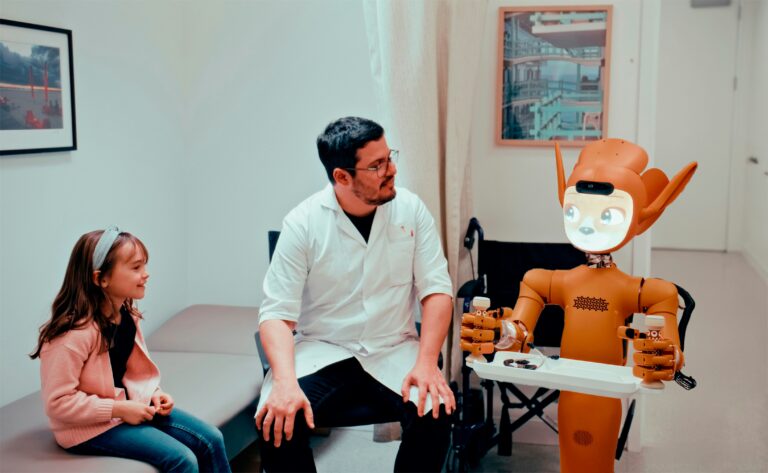
Healthcare used to be defined by expertise alone. If the diagnosis was right, the system was considered effective. That standard no longer holds. Today, the experience around care matters just as much as the outcome. Long waits, repeated paperwork, and disconnected systems have become harder to justify in a world where everything else runs on demand. Technology didn’t just enter healthcare; it exposed how inefficient parts of it had always been.
What’s emerging now is a quieter and consistent shift. Systems are becoming more responsive, more connected, and, in some cases, more anticipatory.
The Shift from Access to Experience
Improved access was the first milestone. Digital booking, teleconsultations, and online records solved basic availability issues. But access alone doesn’t solve frustration.
The expectation has changed. Patients don’t compare healthcare to other clinics anymore; they compare it to the best digital experiences they have elsewhere. If food, banking, and transport can be managed in seconds, delays in healthcare start to feel unnecessary rather than unavoidable.
Appointment systems now sync across devices. Reminders are automatic, not dependent on manual follow-ups. Records move with the patient instead of being rebuilt each time. None of this is groundbreaking individually. The difference is in how consistently it’s being applied.
The World Health Organization has already pointed out that digital health is no longer optional infrastructure; it’s becoming foundational to how systems function.
AI Is No Longer Behind the Scenes
For years, artificial intelligence sat in the background, used for data analysis, not patient interaction. That boundary is disappearing. AI is now handling first-level communication in many healthcare settings. Chat-based systems respond instantly, ask the right preliminary questions, and guide users toward next steps. It’s not perfect, but it removes a layer of delay that used to slow everything down.
In diagnostics, the impact is more direct. AI models trained on imaging data can flag irregularities in scans that might otherwise take longer to identify. In areas like radiology and pathology, this doesn’t replace clinicians; it sharpens their accuracy and speeds up decisions.
Another shift is happening with documentation. Natural language processing tools are reducing the time clinicians spend typing notes. Conversations are translated into structured records, which sounds minor until you consider how much time that actually saves in a typical day.
Personalisation Is Becoming Practical

Personalised care used to be more of a concept than a reality. That’s changing because of data. Healthcare systems now get constant data from wearables and monitoring devices. Providers can see trends over time, such as sleep cycles, heart rate fluctuations, and activity levels, rather than depending on random and occasional examinations. Decision-making is altered as a result.
This has been broadened upon by predictive analytics. Systems are able to identify hazards early by integrating real-time inputs with previous data. With enough indication to take action sooner rather than later, but not with certainty.
These methods have been actively incorporated into clinical processes by organisations like the Mayo Clinic, especially in areas where early diagnosis dramatically alters results.
The Reality Inside Modern Clinics
The idea of a “smart clinic” sounds exaggerated until it’s seen in practice. The changes are less visible than expected, but they’re there.
Check-ins are quicker. Patient histories don’t need to be repeated. Instead of depending on memory or documentation, systems automatically retrieve relevant information. Not because it’s popular, but because it’s increasingly essential to maintain efficiency, even smaller practices are implementing these systems.
Even when you visit a Kensington dentist today, you may see how booking, reminders, and consultations have changed. Human interaction is not going to be replaced by this change. It involves eliminating the steps in the process that were unnecessary in the first place.
Trust Is Still the Constraint
Technology can move fast. Trust doesn’t. Patients are more aware of how their data is handled, and scepticism isn’t unreasonable. Systems that gather more data are also more accountable and carry more responsibility. Adoption is now directly impacted by security, transparency, and ethical application of AI.
However, efficiency by itself fails to promote and encourage confidence. Even a quicker, impersonal method might not be sufficient. The delicate balance is to use automation when it is helpful and a human connection when it is crucial.
What Comes Next
There’s no shortage of predictions, AI-assisted surgery, digital twins, and fully remote monitoring. Some of it will materialise quickly, some of it won’t. What’s more certain is this: healthcare is moving toward being continuous rather than episodic. Less about isolated visits, more about ongoing management.
The real advantage won’t come from adopting technology early. It will come from applying it in ways that actually improve how patients experience care. Most systems are still figuring that out.
