


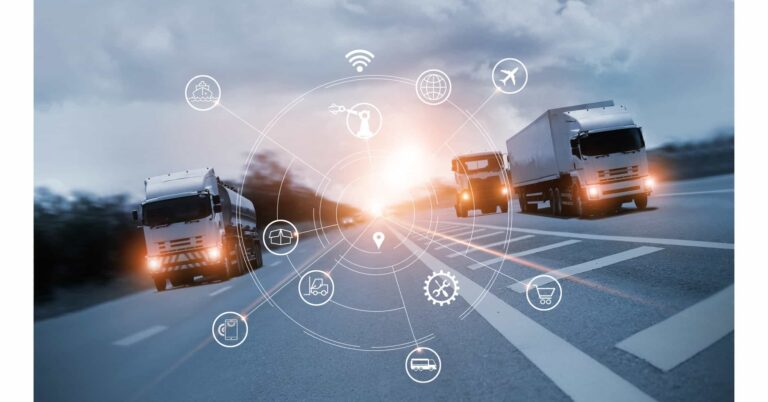
Businesses counting on fleets to get work done in the UK are facing mounting pressure.
Fuel prices are on the rise, tight delivery timeframes are becoming tighter, labour markets are less stable, and annual regulations are adding operational complexity. In order to keep up, organisations leveraging trucks, vans, and company assets need to deliver greater productivity in a way that does not add more complications.
In response, many organisations are looking to move beyond the ambient process of managing fleets to integrate a more data-driven approach to operating. At the heart of this strategy is the increased use of telematics solutions.
The Value of Fleet Visibility
In the past, fleet management used to be managed through manual and siloed processes that were often fraught with delays. This meant that fleets could not be optimised until after money had been spent. Today’s operators now realise that visibility is not just an asset — it is a necessity.
Telematics Solutions as a Practical Business Tool
Arguably, before we discuss the telematics fleet tracking benefits, you need to know how much telematics management solutions have grown over the last few years. And, no, it’s not something that is now only open to the big parties in the game of logistics! In fact, practically any small or medium-sized company in the UK can use telematic data. It gains this knowledge by accumulating specifics on where a vehicle is when it is operating and how the driver has performed or is currently performing. So in short, telematics opens a window of observation for an individual or department to monitor the day-to-day performance of a fleet.
How? Well, fleet decision makers can repeatedly harvest improved efficiency from the data by following the optimum route, servicing a vehicle before it breaks down and measuring whether the driver has taken the duty of care on the road. For drivers, this allows mutual data and communication with ease, no delays in fleet performance and any off-duty trips/tasks they need to be at.
Mobility Integration: Making Life Simple
Managing mobility through a variety of suppliers can be cumbersome and time-consuming, especially if businesses have multiple locations or a growing fleet. As a result, organisations in the UK are now looking to expand how connected services all fit together, from fuel and vehicle services right through to the management of telematics data.
A complete solution like Radius allows companies to implement connected mobility as part of a whole fleet management strategy, bringing fuel cards, telematics, vehicle services, EV charging, and telecoms into one managed environment. In this context, the goal is to simplify and remove additional layers of administration, all the while showing greater transparency, rather than building up more silos of complexity or encouraging the addition of more ‘solutions’.
Compliance, Sustainability, and the Law
The telematics business is not one without rules and regulations. In fact, businesses must adhere to various laws concerning emissions, driver safety, working time, and environmental reporting. The more accurate the data available to demonstrate compliance, the better positioned organisations are to meet regulatory expectations and adapt to evolving legal requirements.
Guidance from GOV.UK on transport legislation and business compliance provides valuable insight for fleet operators. In addition, recommendations from the UK Department for Transport offer practical direction for improving operations! Understanding how government bodies expect vehicle operations to function gives businesses a clearer benchmark to work towards.
