


As the days grow shorter and the temperatures begin to drop, it’s time to think about more than jumpers and hot drinks; your home’s heating system also needs attention. Autumn is the perfect season to prepare your system for the colder months ahead.
A well-maintained heating setup not only keeps your home cosy but also helps you save energy, reduce costs, and prevent mid-winter breakdowns. Checking your radiators and ensuring everything runs smoothly means you’ll be ready when the first cold snap hits.
Step 1: Inspect Your Heating System and Radiators
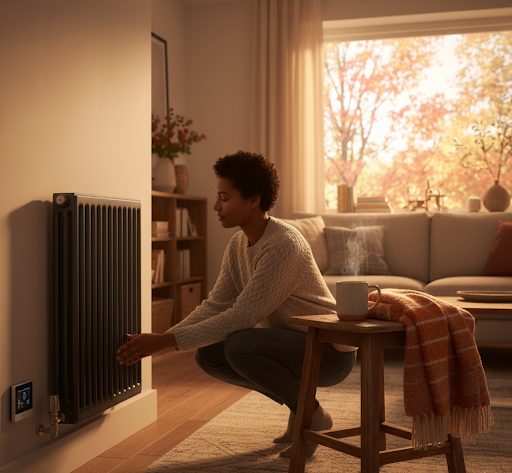
Alt: a person checking a radiator valve
Before switching your heating on full-time, carry out a quick visual inspection of your radiators and connected parts.
Look out for:
- Leaks or rust spots on radiator panels or joints
- Damp patches around valves or pipework
- Gurgling or hissing sounds, which can signal trapped air
If you find any significant damage or persistent cold areas, it’s best to contact a qualified heating engineer. Early intervention prevents small issues from becoming expensive repairs later in the season.
Step 2: Bleed and Balance Your Radiators
Air pockets can accumulate in radiators over the warmer months, leading to cold patches or poor circulation. Bleeding removes this trapped air, ensuring even heat distribution.
How to bleed safely:
- Turn off your heating and let it cool.
- Use a radiator key to slowly open the bleed valve at the top corner.
- When the hissing stops and water begins to flow, tighten the valve.
- Wipe away any drips, then check the system pressure on your boiler afterwards.
Once bleeding is complete, balancing the system helps ensure each radiator heats up evenly, particularly those farthest from the boiler.
Step 3: Clean and Clear for Better Airflow
Dust build-up can reduce the efficiency of your radiators. Keeping them clean helps maintain optimal heat transfer.
Simple cleaning tips:
- Use a radiator brush or a vacuum with a narrow attachment to remove dust between fins.
- Wipe the outer surface with a soft microfibre cloth.
- Avoid placing furniture or curtains directly in front of your radiators, as they can trap heat and reduce circulation.
If you want to refresh your interiors, autumn is a great time to apply a new coat of heat-resistant paint for a clean, modern finish.
Step 4: Test Thermostats and Valves
A functioning thermostat and responsive radiator valves are essential for energy control and comfort.
- Check that thermostatic radiator valves (TRVs) open and close properly.
- Test your main thermostat’s accuracy by comparing it with a room thermometer.
- Consider upgrading to smart heating controls, they allow you to set room-specific temperatures and schedules from your phone.
Ideal temperature guide:
- Living rooms: 20–22°C
- Bedrooms: 16–18°C
- Bathrooms: 22–24°C
Accurate temperature control keeps your home comfortable without wasting energy.
Step 5: Service Your Boiler and Check System Pressure
Even the most efficient radiator system relies on a healthy boiler. Booking a professional service before winter ensures everything operates safely and efficiently.
During your check, confirm that:
- The boiler pressure sits between 1–2 bars (as shown on the gauge).
- All connections are secure and free from leaks.
- The pilot light burns a steady blue flame, not yellow or orange.
A serviced boiler helps your entire heating network run more effectively, reducing the risk of breakdowns in the coldest months.
Step 6: Improve Energy Efficiency for the Season
Small adjustments can make a big difference to comfort and costs during autumn.
Energy-saving ideas:
- Fit radiator reflectors on external walls to bounce heat back into the room.
- Use smart thermostats to automate your heating schedule.
- Insulate exposed pipes in lofts or garages to prevent heat loss.
- Seal draughts around windows and doors to maintain consistent warmth.
- Upgrade to low-carbon or dual-fuel radiators that work efficiently with renewable energy systems such as heat pumps.
By combining maintenance with smart upgrades, you’ll notice improved performance and lower bills throughout the season.
Step 7: Add Autumn Warmth Through Design
Autumn is also the ideal time to re-evaluate the design aspect of your heating. Radiators today are more than functional; they can be stylish features in their own right.
Design suggestions:
- Install vertical radiators in narrow spaces for efficient heat and a modern look.
- Choose textured or metallic finishes like anthracite or brushed brass for added warmth and sophistication.
- Complement your heating with soft lighting and layered textiles such as throws, rugs, and curtains for that inviting autumn feel.
A combination of warmth and design creates a home that feels both comfortable and visually appealing.
Stay Cosy and Prepared This Autumn
Preparing your heating system early in the season ensures a smooth transition into colder weather. Regular checks, simple maintenance, and small energy-saving upgrades can make your home more efficient and comfortable.
From bleeding, cleaning, to testing thermostats and improving efficiency, these small steps guarantee steady warmth, lower energy costs, and peace of mind as autumn unfolds. Taking time now to maintain your radiators and heating system means you’ll enjoy a season filled with comfort, not cold spots.
