


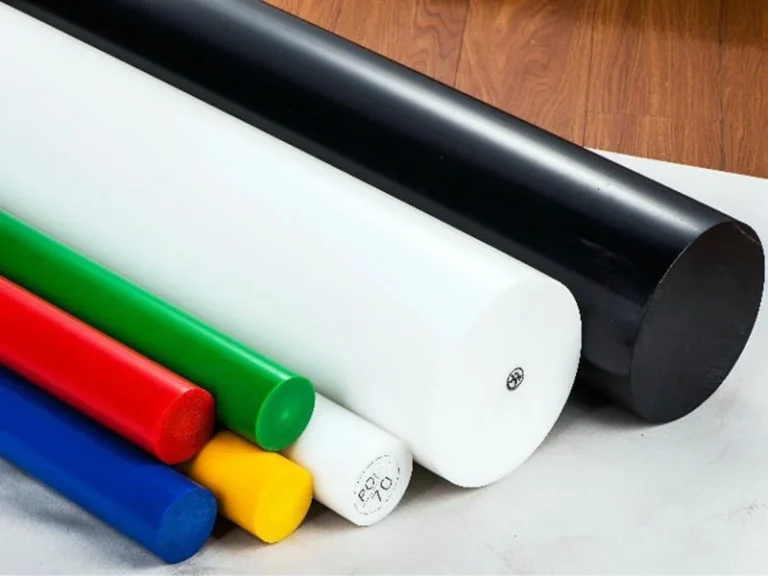
Nylon (Polyamide), High-Density Polyethylene (HDPE), and Acetal (Polyoxymethylene or POM) are three of the most widely used engineering plastics in UK industries, including manufacturing, food processing, and construction. While all three are polymers, they possess distinct material properties that make them suitable for vastly different applications.
If you need a reliable starting point for raw materials, an engineering plastic by Simply Plastics gives you a sheet or rod you can machine with standard tools. They offer plastics suitable for engineering and manufacturing tasks, and you can work them into precise components when you follow normal machining practice.
However, choosing the correct one requires a careful comparison of mechanical strength, wear resistance, and moisture absorption. So here is a detailed comparison of Nylon, HDPE, and Acetal. Let’s get into it…
Nylon (Polyamide – PA)
Nylon is an extremely tough, wear-resistant, and versatile engineering plastic, often used as a replacement for metals where friction and wear are concerns.
Key Characteristics
- Mechanical Strength: Excellent tensile strength, impact resistance, and high stiffness, making it suitable for structural components.
- Wear Resistance: Very good, particularly when lubricated, making it ideal for moving parts.
- Moisture Absorption: High. Nylon absorbs moisture from the environment, which can cause dimensional changes and slight loss of strength. This is a critical factor in damp UK environments or submerged applications.
- Temperature Resistance: Good high-temperature resistance.
Common UK Applications
- Bearings and Gears: Used extensively in machinery due to low friction and high wear resistance (often in cast nylon grades).
- Structural Components: Suitable for complex machined parts, roller wheels, and guides in manufacturing lines.
- Electrical Insulation: Used for insulators and housings due to its good electrical properties.
Acetal (Polyoxymethylene – POM)
Acetal is known for its excellent dimensional stability, low friction, and high strength, making it the preferred choice for precise, long-lasting components. It is often considered a reliable upgrade over Nylon in areas where dimensional stability is key.
Key Characteristics
- Mechanical Strength: High rigidity, excellent hardness, and good creep resistance (resistance to deformation under load).
- Wear Resistance: Very good, with low coefficient of friction.
- Moisture Absorption: Very Low. Acetal has superior dimensional stability and low moisture absorption compared to Nylon, making it excellent for components that must retain precise tolerances in wet or humid conditions.
- Machinability: Excellent, allowing for very tight tolerances in complex CNC machining applications.
Common UK Applications
- Precision Gears and Bushes: Used in demanding environments like automotive parts and high-speed machinery where accuracy is crucial.
- Fluid Handling: Ideal for manifolds, valves, and pump components due to its low water absorption and good chemical resistance.
- Sliding Components: Used for sliding parts, fixtures, and jigs requiring consistent, smooth motion.
High-Density Polyethylene (HDPE)
HDPE is a commodity thermoplastic, characterised by its outstanding chemical resistance, low cost, and flexibility. It’s indispensable for high-volume, low-friction, and chemical-resistant applications.
Key Characteristics
- Mechanical Strength: Lower strength and stiffness compared to Nylon and Acetal, but very high impact strength (especially at low temperatures).
- Wear Resistance: Excellent chemical resistance; poor heat resistance.
- Moisture Absorption: Negligible. HDPE is virtually waterproof, making it the material of choice for submerged or highly chemical-exposed tasks.
- Flexibility: Excellent flexibility, allowing it to be easily moulded and used in non-rigid applications.
Common UK Applications
- Food and Beverage: Widely used for cutting boards, storage tanks, and conveyor components due to its low cost and compliance with food-contact regulations.
- Piping and Containment: Used for drainage pipes, chemical tanks, and outdoor storage where weather and chemical resistance are necessary.
- Protective Applications: Ideal for bumper strips, wear pads, and liners where low friction and impact damping are required.
Making the Right Choice for UK Conditions
Your decision should start with the part’s function. If you need strength with good wear behaviour for gears or bushes, nylon will usually feel appropriate. If chemical contact, cleaning routines or damp conditions dominate the environment, HDPE offers more stable performance.
Where you need tight tolerances and smooth movement, acetal often gives the most predictable results. It also suits small components where dimensional drift can cause early failure. You should review temperature exposure too because each material has limits that influence long-term stability.
All in All
Nylon, HDPE and acetal all offer numerous benefits for UK applications, and each one supports a different set of demands. Nylon gives you strong wear behaviour, HDPE offers impact and chemical resistance, and acetal provides stiffness and stable movement.
When you match these traits to your conditions, you can produce parts that last longer and perform with greater consistency. Now that you understand these materials a little better, you can choose one that support safe, dependable use across varied projects.
