


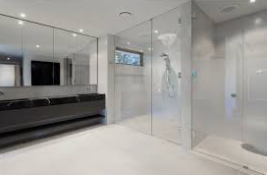
Bathrooms rarely age evenly. In many homes, it is the shower that shows wear first. Curtains discolour, liners cloud over time, and framed enclosures collect residue in tracks and joins that are difficult to clean properly. Even when tiles, vanities and fittings are still in good condition, these elements can make the space feel dated and harder to maintain. Installing glass shower screens is a simple upgrade that restores a bathroom to a clean, modern baseline while improving light, accessibility and ease of cleaning.
What glass shower screens change in a bathroom
One of the most noticeable benefits of glass shower screens is how they open up the room visually. Unlike curtains or heavily framed enclosures, glass removes visual barriers around the shower area. Floor tiles can run continuously through the space, and wall finishes remain visible rather than stopping abruptly at fabric or metal edges. From the doorway, the bathroom reads as a single, cohesive room instead of a series of divided zones.
This openness has a direct impact on light. Natural light from windows or skylights can pass straight through the shower area instead of being blocked at the screen edge. Artificial lighting also spreads more evenly, reducing shadows and darker corners that often form around enclosed showers. In smaller bathrooms, this can make a noticeable difference to how spacious the room feels.
Glass also changes how the shower sits within the room. Curtains and bulky frames tend to draw attention, particularly when they are wet or left partially open. A glass shower screen remains visually neutral. Even immediately after use, it does not dominate the space or disrupt the overall design.
Easier cleaning and better hygiene
Cleaning is one of the most practical advantages of glass shower screens. Glass does not absorb moisture, so water runs off the surface rather than soaking in. There are no curtains to remove and wash, no liners to replace, and no fabric edges staying damp between uses.
In most cases, cleaning involves wiping a single surface. Frameless and semi-framed designs further reduce cleaning time by minimising tracks, seals and joins where soap scum and grime typically build up. With fewer crevices, residue has fewer places to collect, which helps the shower stay cleaner for longer.
In households where the bathroom is used frequently or by multiple people, this makes a noticeable difference. The shower dries more quickly between uses, and regular maintenance becomes simpler and less time consuming.
Improved access and everyday usability
Glass shower screens also improve how the shower functions day to day. Entry and exit points are clearly defined, and movement within the shower feels less restricted. This can be particularly beneficial in shared bathrooms, where multiple people may be moving through the space during busy mornings.
For households planning long-term use, ease of access becomes increasingly important. Clear openings and well-designed doors reduce awkward manoeuvring and help the bathroom remain practical as needs change over time.
Choosing the right type of glass shower screen
The most suitable screen style usually comes down to the bathroom layout and available space. In compact bathrooms, swinging doors can create problems. They may clip vanities, block walkways or limit access when left open. Sliding shower screens stay within the shower footprint, making them a practical option where space is tight.
Where there is more room, pivot doors offer wider openings and easier access. These are often a good choice for shared bathrooms, where clear entry points help keep traffic moving smoothly.
Fixed glass panels are commonly used in walk-in showers. They work well when the panel is wide enough to contain water without narrowing the entry. In smaller walk-in designs, fixed panels can feel more open than doors, provided the layout has been carefully planned.
Wall condition also plays a major role in determining the right option. Fully framed screens are more forgiving in older homes where walls and floors may not be perfectly straight. Semi-framed screens suit walls that are mostly even, while frameless screens require accurate walls, floors and tile lines, as there is very little room for adjustment during installation.
Design details that make a difference
The finer details of a shower screen have a significant impact on the overall look of the bathroom. Hinges, handles and framing sit at eye level and remain visible regardless of screen style. Oversized or bulky hardware can quickly date a space, while slimmer fittings tend to blend more seamlessly into modern designs.
Before making a final decision, it is worth viewing hardware in person. Visiting showrooms allows you to assess glass thickness, hinge size and handle finishes properly rather than relying solely on photos or catalogue images. These details influence how refined the finished bathroom feels once the renovation is complete.
A simple upgrade with lasting impact
Updating a shower area with glass shower screens offers both immediate and long-term benefits. The bathroom feels brighter, more open and easier to maintain, without requiring a full renovation. With the right screen style and well-chosen hardware, the space remains functional, clean and visually current for years to come.
Whether part of a broader renovation or a targeted update, glass shower screens provide a practical way to modernise a bathroom while improving everyday usability and comfort.
