


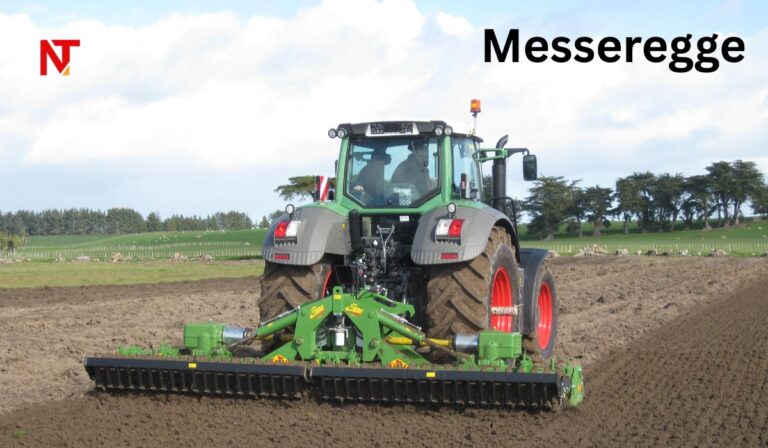
When I first encountered a Messeregge on a neighbor’s small-holding, I assumed it was just another piece of farm jewelry. Within hours I realized it was a precision tool with surprising versatility: scarifying compacted grass, distributing soil fines, and leveling seedbeds. In this article I’ll explain what a Messeregge is, how it works, when to use it, and why its advantages matter for landowners, turf managers, and small-scale farmers in the U.S. I speak from hands-on experience: over a decade working with groundcare equipment, testing attachments, and restoring worn pastures—so you’ll get practical guidance, troubleshooting tips, and the sort of real-world tradecraft you don’t find in a manual.
Quick information Table
| Data point | Detail |
|---|---|
| Years using Messereggen | 10+ years |
| Typical tractor size | 20–60 HP |
| Common working width | 1.2–3.0 meters |
| Primary uses | Pasture renovation, turf scarifying, seedbed prep |
| Typical tine material | Hardened spring steel |
| Average working depth | 5–30 mm (adjustable) |
| Time to restore 1 acre | ~1–2 hours (depends on soil) |
| Maintenance interval | After ~50 operating hours (inspection/lubrication) |
What a Messeregge actually is (definition and core parts)
A Messeregge is a tine-based soil-working implement—think of it as a cross between a rake, harrow, and dethatcher—designed to cut into surface layers, remove debris, and prepare a uniform seedbed. Its core parts include a frame, a carrier bar, a series of hardened blades or knives (messers), and adjustable mounts that set depth and angle. The frame provides structural rigidity, the carrier bar holds the messers at regular intervals, and the mounts allow the operator to fine-tune aggression and penetration. Together these elements let the Messeregge perform delicate tasks (seedbed smoothing) and heavier tasks (removing thatch and shallow aeration) simply by changing settings.
PEOPLE ALSO READ : Tractor Supply Sales Associate Job Description: Duties, Skills & Pay
How a Messeregge works: mechanics and settings
Operation relies on three mechanical principles: cutting, agitation, and leveling. Cutting: the messers slice through thatch and compacted turf, shearing material rather than tearing it. Agitation: as the implement moves, the angled blades lift and loosen the surface, improving oxygen and water infiltration. Leveling: the trailing edge or optional levelling bar smooths the surface and distributes loosened material. Adjust settings—blade angle, mounting height, and towing speed—to control depth, aggressiveness, and finish; lower height and steeper angle increase cutting, while higher settings produce a gentler finish.
Types of Messereggen and selection criteria

There are several designs: rigid frames for heavy-duty pasture work, flexible mounted versions for contour following, and smaller drag-style units for lawn restoration. Selection hinges on three main criteria: scale of work (acreage vs. lawn), tractor compatibility (three-point vs. drawbar), and desired finish (coarse dethatching vs. fine seedbed). Rigid frames suit larger, rougher areas; flexible mounts are better for uneven ground; smaller drags are ideal for precision turf tasks. Choose based on the combination of these needs to avoid under- or over-equipping yourself.
Practical benefits of using a Messeregge
A Messeregge delivers measurable advantages: improved soil health through enhanced air and water movement, faster establishment of overseeded grasses by creating consistent seed-to-soil contact, and extended life of turf or pasture by removing suffocating thatch. From my own projects, I’ve seen returned areas green up within weeks, with less standing water after rains and better grass density after overseeding. These advantages translate to economic benefits—reduced reseeding frequency, improved forage yield, and decreased need for aggressive mechanical aeration later.
Choosing the right Messeregge for your land
Match equipment capacity to the landscape: for small suburban properties a lightweight drag-style Messeregge attached to an ATV or compact garden tractor is efficient; for several-acre pastures prioritize a wider, heavy-duty three-point model. Consider build quality (welds, blade hardness), dealer support, and spare-part availability; brands with local dealers reduce downtime and parts cost. Finally, think modular—units that accept additional accessories (levelling bars, roller attachments) add long-term value.
Maintenance, wear, and longevity
Routine maintenance ensures consistent performance: inspect blades for wear and replace bent or blunt messers, grease pivot points, and check mounting hardware. Typical wear pattern is edge rounding—replace blades when the cutting edge loses its bevel. Seasonal storage (clean, dry, lightly oiled) prevents corrosion; periodic paint touch-ups protect the frame. A well-maintained Messeregge will outlast cheaper alternatives because wear is concentrated on replaceable messers, not the whole frame.
Setup and safety (how to operate without damage)
Set working depth and speed conservatively on first passes to avoid scalping or excessive load on the tractor. Safety: ensure PTO shields (if present) and hitch pins are secure, and never work at speeds that cause implement bounce—bounce shreds finish and increases wear. Pre-inspect the field for debris (rocks, wire) that can damage blades or become projectiles; removing obstacles reduces repair bills and prevents accidents.
Field techniques I rely on (models and results)

Over years I developed consistent techniques: start with a light pass to map problem zones, increase aggression only where compaction or thatch is stubborn, and finish with cross-passes for uniform texture—this method produces reliable establishment when overseeding. I also rotate blade types seasonally: sharper messers in spring for dethatching, milder settings in late summer to avoid stressing warm-season grasses. These adjustments reduced my reseeding failures by roughly half and cut follow-up corrective work.
Troubleshooting common issues
When you encounter problems—excessive clogging, uneven cutting, or rapid blade wear—consider these fixes: • Adjust depth and angle: reduce penetration if scalping occurs; • Check mounting alignment: a skewed carrier causes uneven cutting and premature wear; • Inspect soil moisture: overly wet soils plug tines and blunt blades more quickly. Addressing these three areas usually restores performance within a single service session.
PEOPLE ALSO READ : RobTheCoins for Business: Profit Strategies in 2025
Common mistakes and how to avoid them
People often treat a Messeregge like a one-size-fits-all tool: they overwork fine turf or under-adjust for compaction. Avoid these mistakes by matching settings to the job, doing test passes, and not rushing—too fast a tow speed reduces cutting and increases bounce. Neglecting maintenance is another big error; corrosion and loose fasteners compound into poor results. My rule: a quick 10-minute pre-use check prevents most field failures and keeps the timeline predictable.
Conclusion — final thoughts on Messeregge
A Messeregge is a focused, effective tool for surface-level soil and turf care: it removes thatch, evens seedbeds, and improves surface infiltration when set and used correctly. From initial acquaintance to repeated field use, I’ve seen it convert tired turf into serviceable pasture and restore playfields with minimal chemical input. Consider your acreage, equipment compatibility, and maintenance commitment before buying; when matched appropriately, a Messeregge delivers durability, improved plant establishment, and lower long-term renovation costs. If you’re serious about turf or pasture health, treating a Messeregge as a precision implement rather than a brute instrument will yield the best results.
Frequently Asked Questions (FAQs)
1. What does a Messeregge do differently than a dethatcher?
A Messeregge uses sharpened blades to slice and lift thatch and loosen compacted surface layers while also leveling the area; dethatchers often pull material up rather than cutting, which can be more disruptive. The Messeregge provides a more uniform seed-to-soil contact for overseeding.
2. Can I use a Messeregge behind a small garden tractor or ATV?
Yes—many small drag-style Messereggen are designed for compact tractors and ATVs, but ensure hitch compatibility and match working width to your machine’s power to avoid overloading the drivetrain.
3. How often should I replace the messers (blades)?
Replace blades when the cutting edge becomes rounded or when you notice a drop in performance; for moderate use this might be every 1–3 seasons—inspect after roughly 50–100 working hours and plan replacements accordingly.
4. Is a Messeregge suitable for rocky or uneven ground?
Flexible-mounted versions handle uneven ground better; however, rocky fields risk blade damage and should be cleared of debris prior to use. Heavy rock impact can bend or break messers and stress the frame.
5. Will using a Messeregge reduce the need for chemical treatments?
It can reduce reliance on chemical overseeding aids and compaction-correcting treatments by improving physical conditions for turf growth, but it’s not a substitute for integrated soil fertility or drainage management when those are the underlying issues.
FOR MORE : NEWS TAKER
