


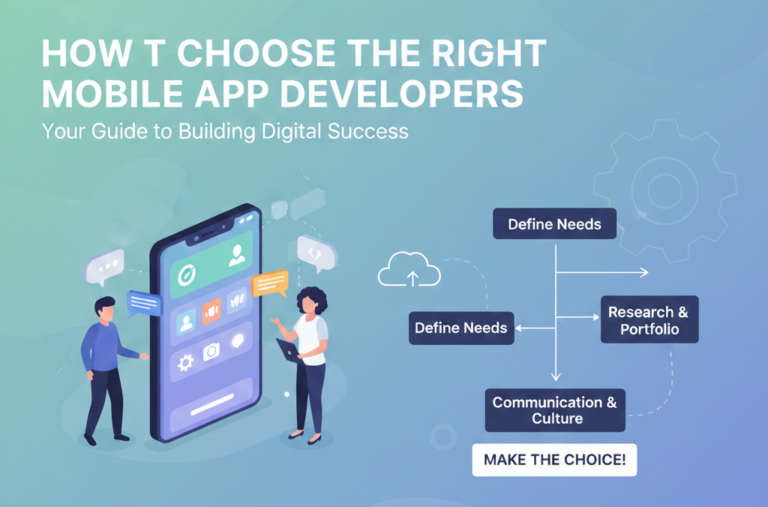
When planning a mobile app, one of the most critical decisions is choosing the right development partner. If you choose mobile app developers without proper research, your project risks delays, poor quality, and cost overruns. The right developer transforms your vision into a smooth, scalable application. This guide explains how to choose the right mobile app developers, the factors to consider, common pitfalls, and practical steps to ensure your app succeeds.
Importance of Choosing the Right Mobile App Developer
A mobile app reflects your brand and engages users directly. Every interaction, from loading speed to usability, affects user satisfaction. Skilled mobile app developers know how to balance design, performance, and security. They guide your decisions to prevent costly mistakes.
Choosing the wrong developer can result in apps that crash, lag, or fail to meet user expectations. It may also lead to budget overruns, missed deadlines, and lost opportunities.
The right developer not only delivers a functional app but also helps build scalable mobile applications. These are apps that can grow and adapt to new requirements, ensuring long-term success.
Factors to Consider When Choosing a Mobile App Developer
1. Experience and Expertise
Experience matters more than promises. Look for developers who have built apps similar to yours. Experienced mobile app developers understand platform limitations, security challenges, and performance optimization.
They can foresee issues before coding begins, saving time and cost. Check for their knowledge in both iOS and Android platforms, backend systems, and integrations. Developers with proven expertise in the mobile app development process are less likely to make beginner mistakes.
2. Portfolio and Track Record
A strong app development portfolio shows what a developer has achieved. Evaluate the apps they built for usability, design consistency, and performance. Ask for case studies describing challenges and solutions.
Past success often predicts future reliability. Look for apps that remain active in app stores, reflecting ongoing support. Developers who maintain apps demonstrate responsibility and commitment to quality.
3. Communication and Collaboration
Good communication ensures your vision is understood. Developers should explain technical choices in simple terms. Frequent updates, progress reports, and responsive feedback are critical.
A strong collaborative approach reduces misunderstandings. Teams that welcome input and clarify doubts contribute to a smoother process and better app outcomes.
4. Cost and Budget
Cost is important, but focus on value over low prices. Be wary of estimates that seem too good to be true. Understand factors influencing mobile app development cost, including features, platforms, integrations, and testing.
Ask for detailed quotes and milestone-based payments. Transparent pricing avoids surprises and builds trust. Investing in a capable developer upfront saves money from rework and delays.
Different Types of Mobile App Developers
1. Freelancers
Freelancers are ideal for small projects or prototypes. They are flexible and often cost-effective. However, their availability can vary, and long-term support may be limited.
For complex apps, relying on a single freelancer may risk delays. Choose freelancers for short-term, clearly defined tasks rather than full-scale apps.
2. In-House Developers
An in-house team offers control and a deep understanding of your product. They are best for long-term projects needing constant updates.
However, hiring, training, and retaining in-house developers increases cost. Managing a team requires additional resources but ensures dedicated focus on your product.
3. Development Agencies
A mobile app development company provides a full team with designers, developers, and project managers. Agencies are suited for complex or large-scale apps.
They follow structured workflows, deliver on deadlines, and provide app maintenance and support. Agencies can handle multiple platforms, integrations, and scaling needs efficiently.
Steps to Follow in Choosing the Right Mobile App Developer
1. Define Your App’s Requirements
Start with clear goals, features, and target users. Decide if your app needs custom mobile app development or standard functionality. Well-defined requirements help developers estimate cost, timeline, and technical needs accurately.
2. Research and Shortlist Potential Developers
Use referrals, online reviews, and professional networks. Shortlist developers who match your industry, platform, and budget. Look for those offering end-to-end mobile app development services.
3. Review Their Portfolios and Past Work
Examine apps for performance, design, and usability. Ask how developers solved previous challenges. Evaluate their experience with building scalable mobile applications.
4. Conduct Interviews and Ask for References
Interviews reveal communication style, problem-solving ability, and honesty. Request references to confirm timelines, quality, and post-launch support. A developer’s transparency often predicts reliability.
5. Consider the Developer’s Communication Style and Work Process
A clear mobile app development process includes planning, design, coding, testing, and deployment. Developers who share milestones and involve you in decisions reduce risks and improve collaboration.
6. Negotiate the Project Cost and Timeline
Agree on scope, deliverables, timeline, and payment structure. Clarify change management and potential additional costs. Fair negotiations balance quality, speed, and budget.
7. Sign a Contract and Establish a Clear Project Plan
Contracts protect both sides. Include deliverables, timelines, intellectual property rights, and app maintenance and support. A clear project plan aligns expectations and reduces confusion.
Red Flags to Watch Out for When Choosing a Mobile App Developer
1. Lack of Experience or Technical Expertise
Avoid developers without real-world apps or platform knowledge. Weak technical skills often lead to crashes, slow performance, or poor design.
2. Poor Communication and Unresponsiveness
Slow or unclear communication can delay progress. Reliable developers are proactive, transparent, and responsive.
3. Overpromising and Underdelivering
Developers promising unrealistic timelines or guaranteed success may not meet expectations. Quality apps require realistic planning and testing.
4. Hidden Costs and Unexpected Delays
Vague estimates or missing details often cause conflict. Request full cost breakdowns and clear policies for scope changes.
Benefits of Choosing the Right Mobile App Developer
1. High-Quality and Efficient App Development
Experienced developers follow best practices, ensuring smooth performance, minimal bugs, and high security.
2. Better Collaboration and Communication
Strong communication simplifies feedback and reduces misunderstandings. Teams aligned with your goals deliver consistent results.
3. Cost-Effectiveness
Investing in skilled developers reduces rework, delays, and future maintenance costs. Proper planning ensures maximum value for money.
4. On-Time Project Delivery
Structured workflows and experience help developers meet deadlines. Timely delivery supports marketing, launch, and business planning.
5. Long-Term Support and Maintenance
Apps require updates, bug fixes, and improvements. Ongoing app maintenance and support ensure longevity. Developers familiar with your code make scaling and updates easier.
Conclusion
Choosing the right developer is essential for app success. Focus on experience, portfolio, communication, and process. Take time to evaluate, interview, and confirm references.
When you know how to choose the right mobile app developers, you reduce risks, save costs, and gain confidence. The right partner delivers high-quality apps, supports growth, and ensures your product thrives long-term.
Frequently Asked Questions
How do I decide if I should hire a freelancer or a company?
Freelancers are suitable for small or prototype projects. Agencies provide a full app development team for complex apps, long-term support, and multi-platform deployment.
What skills should I look for before I hire mobile app developers?
Look for expertise in iOS and Android platforms, UI/UX design, testing, and problem-solving. Teams should demonstrate mobile app development expertise and real project results.
Why is platform expertise important in app development?
Different platforms have unique rules, frameworks, and user expectations. Skilled iOS and Android app developers ensure performance, usability, and app store compliance.
How important is the development team structure?
A strong app development team includes designers, developers, and testers. Structured teams improve delivery speed, reduce errors, and simplify collaboration.
How do I know I am working with the best mobile app developers?
Check their app development portfolio, client reviews, timelines, and communication. The best mobile app developers deliver quality, reliability, and ongoing support.
What happens after the app is launched?
Pensurench involves updates, bug fixes, and improvements. Ongoing app maintenance and support ensures security, compatibility, and scalability.
How can I control mobile app development cost?
Define requirements clearly, get detailed quotes, and monitor milestones. Experienced developers optimize resources without compromising quality.
