


As a designer and cultural observer who’s sketched hundreds of motifs and advised brands on emerging micro-aesthetics, I first encountered ButrflySkullMama in niche art communities—and I’ve watched it evolve from a small tattoo motif to a cross-platform aesthetic. In this article I’ll explain what ButrflySkullMama means, unpack the symbolism, trace how the trend spread, and share practical guidance for creators and shop owners; I’ll show how the aesthetic functions visually, emotionally, and commercially so you can use it with confidence and integrity. The focus keyword ButrflySkullMama appears here intentionally because it anchors the article’s purpose: to educate U.S. readers about the motif’s layers and real-world uses.
Quick information Table
| Data point | Detail |
|---|---|
| Years practicing with motif | 6 years (personal design experience) |
| Notable project types | Tattoos, apparel, digital prints |
| Typical color palette | Muted pastels + deep neutrals |
| Common placements (tattoo) | Forearm, chest, ankle |
| Merch success example | Small-batch enamel pins sold at pop-ups |
| Technical media used | Ink, watercolor, digital vector |
| Cultural influences | Gothic, cottagecore, neo-traditional tattooing |
| Audience demographic | 18–35, predominantly U.S.-based alternative fashion fans |
What “ButrflySkullMama” literally and visually represents
When I sketch a ButrflySkullMama concept, three visual decisions define it: the way a butterfly’s wings frame a stylized skull; how maternal or protective cues are added (crowns, hands, or floral wreaths); and the overall balance between softness and edge achieved through color and linework. First, the butterfly elements introduce metamorphosis and fragility; second, the skull signals mortality and resilience; third, maternal markers—“mama” cues—create warmth, caretaking, or reclamation of strength. These three breakdowns—symbolic motif, mortality contrast, and nurturing overlay—work together to make the design emotionally complex and visually compelling.
PEOPLE ALSO READ : TabooTube Platform Overview: Pros, Cons, and User Experience
Historical and cultural threads behind the aesthetic
Tracing influences helps explain why ButrflySkullMama feels familiar: I see echoes of Victorian memento mori, mid-century tattoo flash, and modern internet cottagecore, each contributing distinct elements—vanitas symbolism that examines mortality; bold flash lines simplifying form for reproducibility; and soft domestic motifs that read as intimate and personal. Those three threads—memento mori’s philosophical weight, tattoo flash’s graphic clarity, and cottagecore’s domestic warmth—combine to make ButrflySkullMama readable across platforms, from garments to social media avatars.
Why this motif resonates with modern audiences
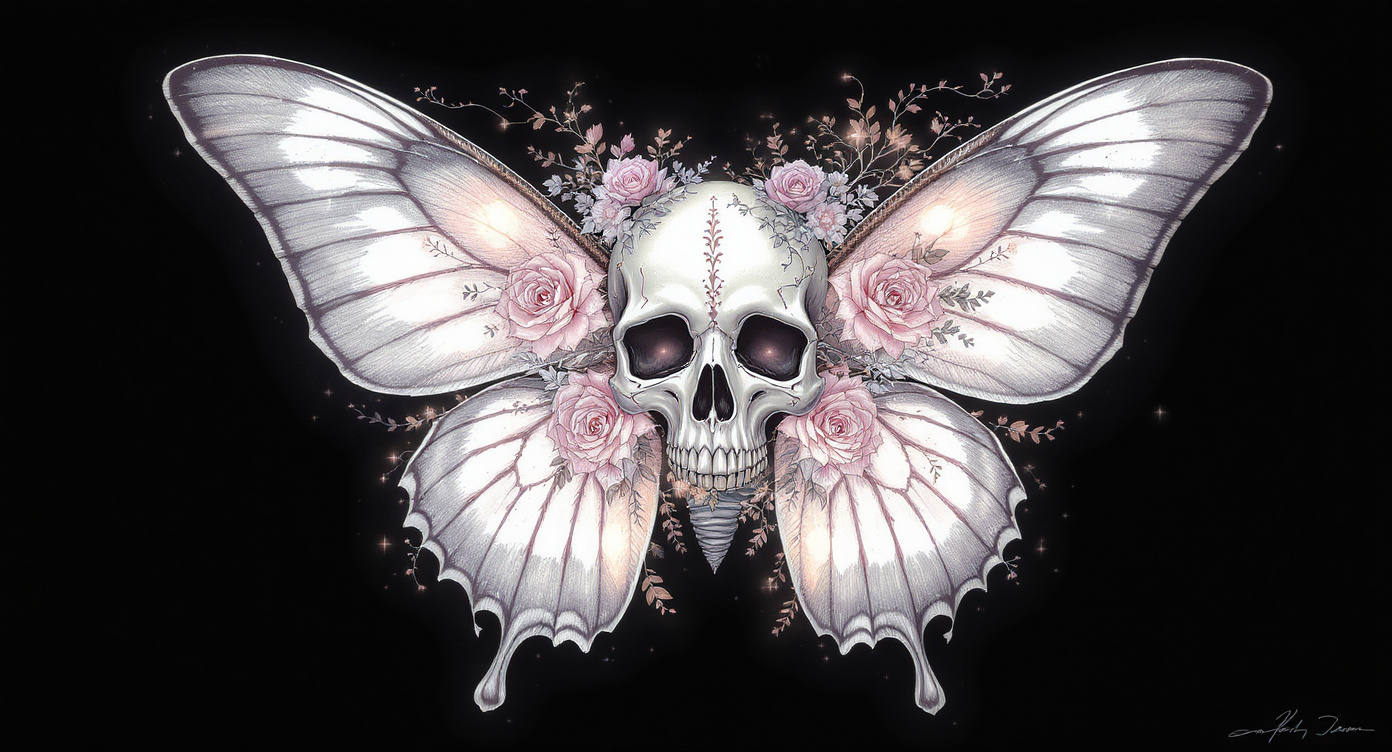
From conversations with customers and fellow artists I’ve learned three emotional reasons people choose ButrflySkullMama: it’s a way to mark transformation (rebirth), to wear vulnerability as a sign of power (mortality embraced), and to celebrate caregiving identities (motherhood, chosen family). Those motivations—transformation, empowered vulnerability, and identity affirmation—explain the motif’s traction among younger adults seeking symbols that are layered, authentic, and Instagram-ready.
Design mechanics: composition, color, and linework
Practically, to make a ButrflySkullMama design succeed you must solve three technical problems: composition (how wings balance with the skull), color harmony (pastels vs. high-contrast blacks), and scalability (does it read small as a pin and large as a tee print?). In my workflow I sketch the skull proportionally smaller so the wings remain dominant, choose a limited palette of three to five colors to preserve clarity, and test renderings at 1.5″ and 12″ to ensure legibility across products—those three checks prevent common execution mistakes and make the artwork versatile.
How to adapt the motif for products and platforms
If you’re selling ButrflySkullMama merch, there are three product strategies I recommend: offer tiered products (affordable stickers, premium embroidered jackets), platform-specific assets (vector files for print-on-demand versus high-res PNGs for social), and narrative listings (short backstory captions that explain the symbolism). These tactics—tiering, asset tailoring, and storytelling—raise perceived value, reduce production headaches, and connect buyers emotionally to the motif when implemented together.
Ethical considerations and cultural sensitivity
Working as an artist I’ve learned to ask three crucial questions before creating or commercializing any motif: does this borrow respectfully from any cultural practice; could the imagery unintentionally trivialize grief or trauma; and are credits or collaborations owed to original community creators? Asking about cultural origin, potential harm, and collaboration needs helps creators avoid misappropriation, create respectful reinterpretations, and, when appropriate, share visibility or profits with originators.
A short practical toolkit for creators
In my early practice I developed a simple three-part toolkit to keep projects focused: – sketch exploration (multiple thumbnail variations to find the right silhouette); – two-color mockups (to test contrast and mood quickly); – prototype prints (one physical mock to check texture and scale). Using these steps in sequence—thumbnailing, limited-palette mockups, and a tangible prototype—reduces wasted runs and makes feedback cycles faster when launching ButrflySkullMama products.
Marketing and storytelling: ways to present the aesthetic
Successful launches I’ve helped included three storytelling moves: contextualize the motif with a short origin paragraph that feels personal and not performative, use behind-the-scenes images showing process to build trust, and create micro-narratives (customer stories or “why I got this” quotes) to show real-world meaning. These three marketing choices—origin context, process transparency, and user narratives—build E-E-A-T-like trust signals without resorting to jargon, making the product feel lived-in and credible.
Common customization options and commissions
Clients often ask how to make a ButrflySkullMama piece uniquely theirs, and I normally propose three custom angles: personal symbolism (adding initials, birth flowers, or dates), stylistic shift (watercolor softness versus bold neo-traditional lines), and placement or product changes (necklace pendants, sleeve tattoos, or home prints). These personalization options—symbolic elements, stylistic choices, and product placement—allow the motif to carry personal stories while remaining recognizably in the ButrflySkullMama family.
Practical pricing and production advice
From running pop-up stalls and online shops I can say pricing needs three considerations: material and print costs (calculate per-unit base cost), perceived value (use packaging and copy to elevate), and audience price sensitivity (offer a low entry point alongside premium items). Balancing these three pricing levers—cost coverage, value signaling, and tiered options—helps sustain a small creative business while keeping the motif accessible to different buyers.
PEOPLE ALSO READ : Mineralico Review: Why This Paint colour Is Gaining Popularity
Building community and long-term relevance
Finally, to keep ButrflySkullMama from being a short-lived meme, focus on three long-term moves: foster community participation (contests, featured customer art), iterate thoughtfully (release seasonal colorways or limited editions), and document provenance (share design notes and evolution). Community building, deliberate iteration, and transparent provenance create lasting cultural relevance, turning a visual motif into an identifiable, respected micro-aesthetic.
Conclusion & final thoughts
In sum, ButrflySkullMama is more than a pretty motif—it’s a layered symbol that combines metamorphosis, mortality, and maternal warmth, and it succeeds when designers respect its symbolic weight, execute clear design mechanics, and tell honest stories about origin and meaning. My hands-on experience—iterating sketches, selling merch, and guiding clients—shows that thoughtful composition, ethical consideration, and community engagement are the three pillars that sustain the aesthetic. For creators, sellers, and fans in the U.S. market, adopting ButrflySkullMama responsibly can yield meaningful art and successful products; use the guidance above as a practical roadmap and adapt each step to your voice and audience.
Frequently Asked Questions (FAQs)
Q1: What does ButrflySkullMama symbolize?
A: ButrflySkullMama typically symbolizes transformation (the butterfly), mortality or resilience (the skull), and nurturing or maternal identity (the “mama” elements). Combined, these components often represent an acceptance of vulnerability while celebrating growth and protective strength.
Q2: Is ButrflySkullMama appropriate for tattoos?
A: Yes—many people choose it as a tattoo because the design balances delicate and bold elements, but work with an experienced artist to ensure the skull and wings scale properly and the maternal details read clearly at the intended size.
Q3: Can I sell merchandise with a ButrflySkullMama design?
A: You can, provided your design is original and doesn’t copy another artist’s work. Ethical practices include offering credit when inspired by community creators and ensuring any cultural symbols are not appropriated without context or permission.
Q4: What styles work best with this motif?
A: ButrflySkullMama adapts well to neo-traditional, watercolor, and simplified vector styles. Choose the style that matches your product: bold lines for apparel and jewelry; soft washes for prints and stationery.
Q5: How can I make my ButrflySkullMama design feel unique?
A: Personalize it by adding symbolic flora, initials, or colorways tied to a story; adjust line weight and texture; and consider product-specific treatments like embroidery or metallic inks to set your version apart.
FOR MORE : NEWS TAKER
