


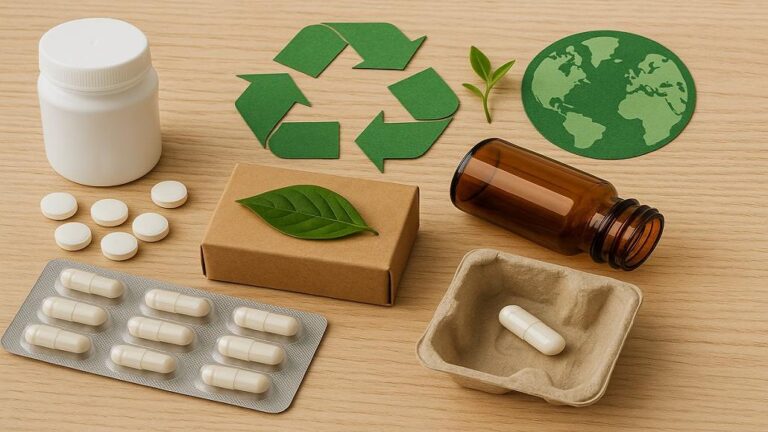
Pharmaceutical packaging is no longer a secondary consideration in drug development. It plays a central role in ensuring product safety, maintaining efficacy, and meeting increasingly strict global regulatory requirements. As a result, pharmaceutical companies are investing heavily in advanced, compliant packaging systems—particularly glass packaging solutions such as amber glass bottles—to protect sensitive formulations and meet regulatory expectations.
Rising Regulatory Pressure in Pharmaceutical Packaging
Regulatory bodies such as the MHRA in the UK, the European Medicines Agency (EMA), and the US Food and Drug Administration (FDA) have significantly tightened expectations around pharmaceutical packaging in recent years. These regulations are designed to ensure that medicines remain safe, stable, and effective throughout their shelf life.
Packaging is now assessed not only for its ability to contain a product, but also for its interaction with the drug itself. Manufacturers must demonstrate that packaging materials do not leach harmful substances, degrade active ingredients, or compromise product integrity under varying environmental conditions.
This has placed increased emphasis on material selection, testing, validation, and traceability across the entire pharmaceutical supply chain.
Why Pharmaceutical Packaging Matters More Than Ever
Pharmaceutical products are highly sensitive to environmental factors such as light, oxygen, moisture, and temperature fluctuations. Poor packaging can lead to degradation of active ingredients, reduced potency, or even harmful chemical changes.
Effective packaging must therefore:
- Maintain drug stability over time
- Prevent contamination from external sources
- Protect against light-induced degradation
- Ensure accurate dosing and safe handling
- Comply with stringent regulatory frameworks
Failure in any of these areas can lead to product recalls, financial losses, and, most importantly, risks to patient safety.
The Role of Glass Packaging in Drug Safety
Among the various materials used in pharmaceutical packaging, glass packaging remains one of the most trusted and widely used solutions. Its popularity is largely due to its chemical inertness and excellent barrier properties.
Unlike certain plastics, glass does not react with its contents. This makes it ideal for storing sensitive pharmaceutical formulations where even minor contamination or interaction could compromise effectiveness.
Key advantages of glass packaging include:
- Chemical stability: Does not leach substances into the product
- High barrier protection: Resistant to gases, moisture, and external contaminants
- Preservation of product integrity: Maintains formulation stability over time
- Compatibility with a wide range of drugs: Suitable for liquids, syrups, and specialised formulations
These characteristics make glass an essential material in pharmaceutical applications where safety and compliance are critical.
Why Amber Glass Bottles Are Industry Standard
Within the broader category of glass packaging, amber glass bottles have become particularly important for pharmaceutical use. Their distinctive colour is not just aesthetic—it serves a vital protective function.
Amber glass is designed to block harmful ultraviolet (UV) and visible light wavelengths that can degrade light-sensitive pharmaceutical compounds. Many liquid medications, vitamins, and chemical formulations are susceptible to photodegradation, which can reduce potency or alter their chemical structure.
Key benefits of amber glass bottles:
- UV protection: Shields contents from harmful light exposure
- Improved shelf life: Helps maintain stability of sensitive compounds
- Reduced risk of degradation: Preserves active ingredient effectiveness
- Regulatory compliance support: Meets expectations for light-protective packaging in many formulations
As a result, amber glass bottles are widely used for syrups, oral solutions, essential oils, and other light-sensitive pharmaceutical products.
Regulatory Compliance and Packaging Standards
Meeting regulatory standards is one of the most complex challenges in pharmaceutical packaging. Packaging systems must comply with Good Manufacturing Practice (GMP) guidelines and undergo rigorous validation before approval.
Key compliance requirements include:
- Material qualification: Ensuring packaging materials are suitable for pharmaceutical use
- Stability testing: Assessing how drugs perform over time in their packaging
- Extractables and leachables testing: Identifying any substances that may migrate from packaging into the product
- Traceability and documentation: Maintaining full records for audit and regulatory review
- Tamper-evidence and safety features: Ensuring product integrity from manufacture to end user
Glass packaging, particularly amber glass bottles, often performs well under these requirements due to its inert nature and proven performance history.
Sustainability and Innovation in Glass Packaging
While regulatory compliance remains a primary driver, sustainability is also becoming a major influence in packaging decisions. Glass is inherently recyclable and can be reused without loss of quality, making it a strong candidate for environmentally responsible pharmaceutical packaging strategies.
However, traditional glass can be heavy and energy-intensive to transport. In response, manufacturers are investing in innovations such as:
- Lightweight glass formulations to reduce transport emissions
- Improved manufacturing processes to lower energy consumption
- Enhanced recycling systems to support circular economy goals
These developments allow pharmaceutical companies to balance regulatory compliance with environmental responsibility, without compromising drug safety.
Future Trends in Pharmaceutical Packaging
The pharmaceutical packaging sector is expected to evolve significantly over the coming years, driven by regulatory pressure, technological advancement, and sustainability goals.
Key emerging trends include:
- Smart packaging technologies: Integration of sensors and tracking systems to monitor temperature, authenticity, and usage
- Increased regulatory harmonisation: More aligned global standards simplifying compliance across markets
- Greater use of data-driven packaging validation: Digital tools to support testing and documentation
- Continued reliance on glass packaging: Especially for high-value and sensitive pharmaceutical products
Despite innovation in alternative materials, glass—particularly amber glass bottles—is expected to remain a cornerstone of pharmaceutical packaging due to its proven safety and compliance record.
Conclusion
As regulatory standards continue to tighten, pharmaceutical companies are placing greater emphasis on packaging solutions that ensure safety, stability, and compliance. Glass packaging remains one of the most trusted materials in the industry, offering unmatched chemical stability and barrier protection.
Within this category, amber glass bottles play a crucial role in protecting light-sensitive medications and maintaining drug efficacy throughout their shelf life. Combined with ongoing innovation and sustainability improvements, glass packaging continues to be a key investment for pharmaceutical manufacturers seeking to meet modern regulatory expectations while safeguarding patient health.
